©BabbaroHouse

MAMMALS OF THE PARK
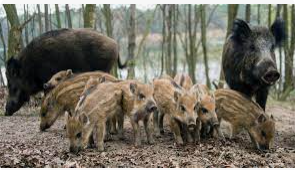
Wild boar
The skin is covered with sparse bristles and only in winter with short hairs and long, thick bristles. There is a mane on the nape and the tail is narrow and pendulous. COMPLETE FACT SHEET >>
The wild boar (Sus scrofa), 0.80 m tall at the shoulder and 1.50 meters long, can reach a weight of 180 kg. The legs are short and thin, the head is elongated with small eyes and large ears; eyesight is not very sharp, but the sense of smell and hearing are highly developed. Males use their canines, which protrude from both jaws, for defense and attack.
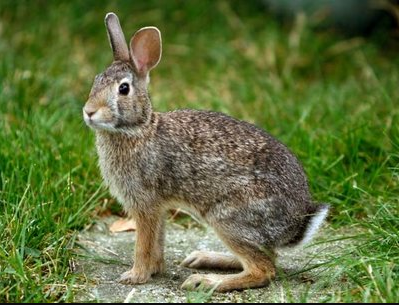
Wild rabbit
It differs from hares by its smaller size, and the reduced size of its head, ears, and hind legs.
The rabbit is faster than the hare and is unbeatable in the art of running in a zig-zag to disorient pursuers; moreover, to jump better, its front legs are shorter than the hind ones.
It lives in colonies, sometimes very large, and its presence can be detected in winter by the "stripping" of bark, which it feeds on in the absence of fresh shoots. COMPLETE FACT SHEET >>
I The wild rabbit (Oryctolagus cuniculus) is generally about 40 cm long, of which 6 or 7 are the tail, which is black on top and white underneath. It has gray-yellowish fur on the upper parts, white on the lower parts, while the nape is rust-colored.
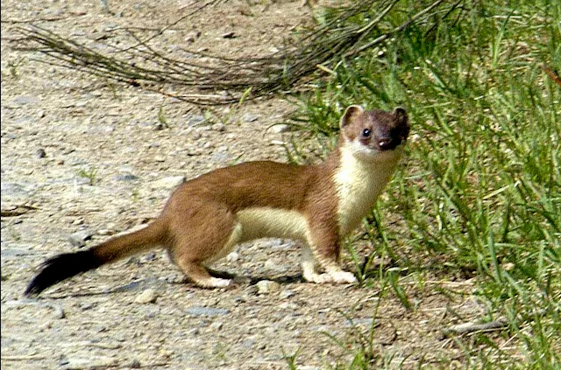
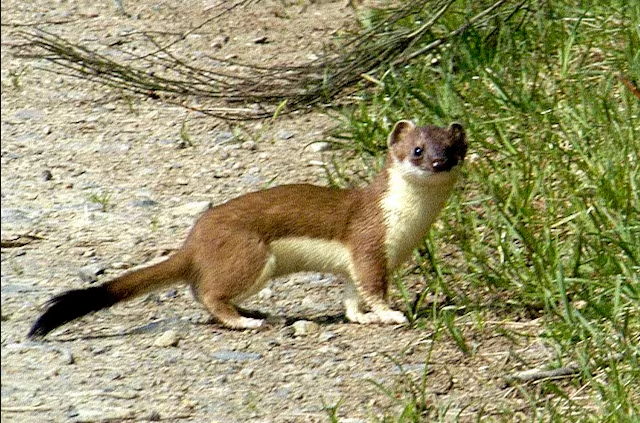
Weasel
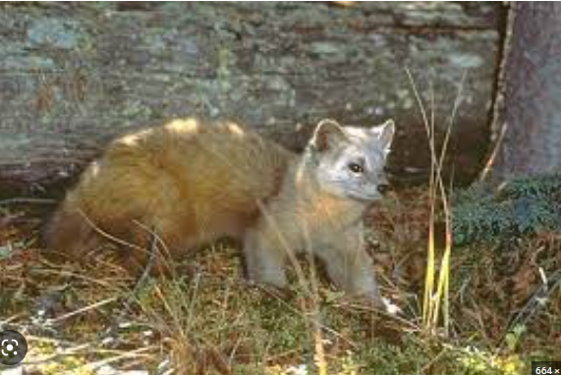
Beech marten
In the northernmost areas, it acquires a winter color characterized by brownish-white spots.
It is a very courageous animal and there are not rare cases in which it attacks humans, letting go only after a very prolonged struggle. Sometimes it bites the legs of horses that pass near its shelter.
The weasel is very agile both in running and in climbing and swimming.
The only bird of prey able to catch it without fear is the goshawk.
A specimen captured when young can be easily tamed and become a domestic companion just like a cat. COMPLETE FACT SHEET >>
The weasel (Mustela nivalis), on average 30 cm long including about 4 cm of tail, has a flexible body covered all year round with short, soft fur, tawny on the back and whitish on the belly, similar to the summer coat of the stoat. The legs are short, sturdy and equipped with sharp, pointed claws. The tail, short compared to the body, gradually tapers from the base to the tip and unlike the stoat, is never black at the tip. The ears are wide and rounded.
The beech marten (Martes foina) is approximately the same size as the pine marten (Martes martes), but it is heavier; it also differs from the latter by the presence of a large white patch on the chest and throat, by its coarser fur, and by having a bare plantar surface.
Very distinctive are the pointed ears and the bushy tail. COMPLETE FACT SHEET >>
Wildcat
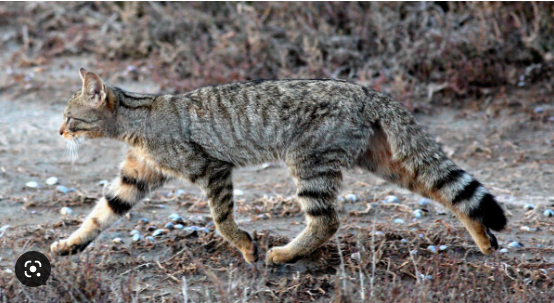
The European wildcat (Felis sylvestris) reaches 1.20 meters in length including the tail, which measures 35 cm. It has a robust, very agile body, a short and rounded head, strong and long legs, especially the hind ones, a blunt-ended tail of uniform thickness. The fur is thick and soft, gray-tawny in color, lighter on the belly, with dark transverse bands; some blackish rings adorn the tail.
It has excellent vision even in poor light conditions, a very good sense of smell, and excellent hearing.
It has straight ears wide at the base and yellow eyes. The canines and carnassial teeth are particularly well developed, suitable for tearing prey. COMPLETE FACT SHEET >>
Dormouse
The maximum lifespan in the wild is around six years, and the dormouse's main enemies are especially nocturnal birds of prey, stone martens and pine martens. COMPLETE FACT SHEET >>
The dormouse is about 30 cm long, of which 13 cm is tail. It has gray or brown fur on its back and white-yellow on its belly. The upper jaw has only one pair of incisors and in total it has twenty teeth.
Porcupine
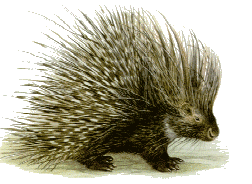
The crested porcupine (Hystrix cristata) is distinguished by its stocky body, large head, and especially by its coat bristling with very well-developed quills. It can be about 80 cm long, including the 10 cm tail, and no more than 25 cm high; the largest specimens can weigh almost 20 kg. Poor in sight and hearing, it compensates with a highly developed sense of smell.
On the upper lip there are several rows of black, shiny whiskers, while on the head and along the back extends an erectable mane of long, coarse, white bristles. The rest of the body is covered with long, sharp, dense quills, alternating black and white in color. The quills can reach 40 cm in length on the back, while on the tail they do not exceed 5 cm. The underside of the body is covered with dark fur.
All the quills can be raised by the porcupine thanks to strong musculature. COMPLETE FACT SHEET >>
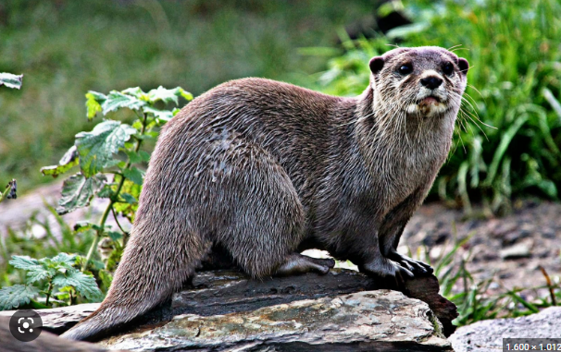
Otter
The legs are very short and webbed, while the fur is thick and short, brown in color. It has long, highly sensitive whiskers that allow it to locate fish and eels, detecting even their slightest movements.
It has extremely acute senses and in particular sees, smells, and hears excellently.
Otters devote much of their time to play, which is second in importance only to hunting and swimming. COMPLETE FACT SHEET >>
THEcommon or river otter (Lutra lutra) can be up to 120 cm long, including the 45 cm tail, and is characterized by a rounded and elongated head, rounded snout and small eyes, the ears are short and rounded, almost completely hidden by the fur.
Marten
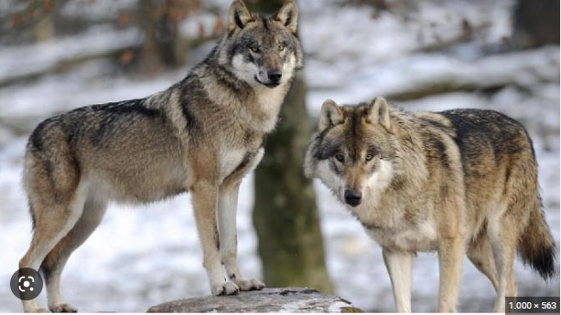
Wolf
It is about 45 cm long, to which about 25 cm of tail must be added. The fur, thick and shiny, is brown with a dark muzzle and chin and lighter head and dorsal parts; the short, rounded ears have a white edge; the long, bushy tail is very useful both in running and jumping because it acts as a stabilizer, while the paws, having an opposable fifth toe, guarantee a perfect grip on trees.
It is a very agile animal that climbs trees with extreme ease, quickly chasing dormice and squirrels up to the highest tops. COMPLETE FACT SHEET >>
The marten (Martes martes) closely resembles the beech marten (Martes foina), but unlike the latter, the characteristic spot on the throat and chest is smaller and is never white, but yellow.
The wolf (Canis lupus) is the largest species among the representatives of the genus Canis. Body size varies greatly depending on the geographical area considered, and can even reach 60 kg in weight. It has a slender body, with an elongated muzzle, triangular ears that are not very long, a relatively short neck, a short and bushy tail, and long, thin limbs.
The coat color is generally camouflaged, the eyes are oblique, light brown in color, and set in a frontal position and rather far apart.
A characteristic of the species is the presence of particularly developed "carnassial" teeth, whose function seems to be to cut through large bones and tendons.
The wolf present in Italy reaches a weight between 24 and 40 kg, while the length from the tip of the muzzle to the tail is between 100 and 140 cm. The coat color varies from tawny to gray and recently individuals with black coloring have been sighted in the Casentino Forests National Park and in the Tuscan-Emilian Apennines. COMPLETE FACT SHEET >>
Moscardino
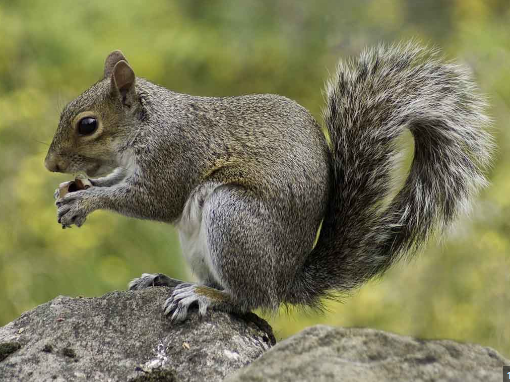
Squirrel
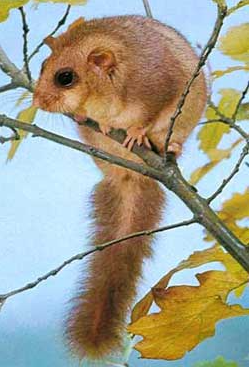
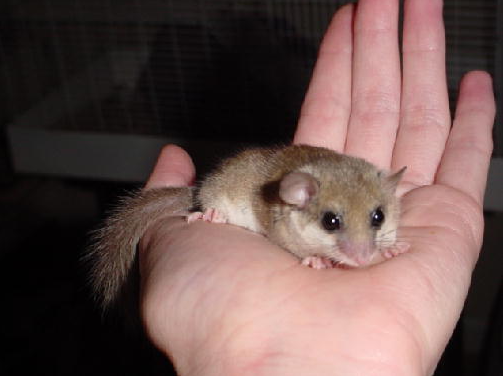
The hazel dormouse is a great climber and often hangs from branches with only its hind legs in order to pick fruit.
It lives in small groups that together build, in the thickest bushes, a round, soft nest sheltered from the cold, made with leaves, moss, small roots, and hair.
Around mid-October, they retreat to some secluded place and, after accumulating abundant food supplies, prepare a spherical bed inside which they curl up and fall asleep. The final awakening occurs as soon as it senses the warm sun of spring. COMPLETE FACT SHEET >>
The hazel dormouse (Muscardinus avellanarius) has an overall length of about 16 cm, including 6 cm of tail. The fur is tawny yellow on the upper part and lighter on the lower part, the ears are small, and the tail is bushy.
If the weather is clear, the squirrel is always moving on the trees where it finds food and shelter; it constantly moves from one tree to another, leaping from branch to branch. Its bushy tail is useful precisely for jumping.
During winter, it falls into a deep hibernation, during which it wakes up only long enough to eat a little food. In Siberian regions, squirrels undertake real migrations to places where they can find ripe pine cones.
The worst enemy is the marten which climbs with agility almost equal to that of squirrels and chases them even into the nests where they take refuge. COMPLETE SHEET >>
The common squirrel (Sciurus vulgaris) is about 25 cm long, plus a 20 cm tail, and has a reddish-brown or almost blackish-gray coat, while the lower parts are almost always whitish.There is always a tuft of hair on the ear.
Rate
Hazel dormouse
Its movements are slow and lazy, its gait is uncertain and heavy.
Females can be distinguished from males by their smaller size and lighter fur color.
It is hunted for its fur, which is used to make brushes. FULL PROFILE >>
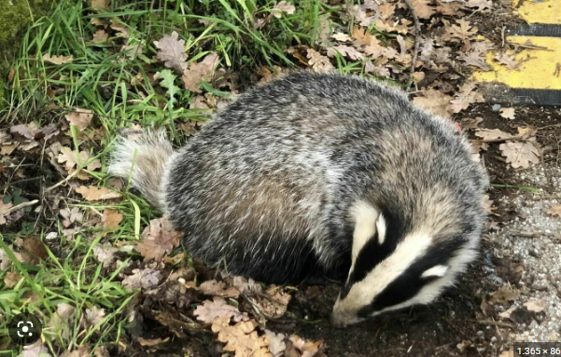
The Badger (Meles meles), the largest of the Italian mustelids, is a plantigrade no longer than 80 cm, including a tail of about 18 cm, characterized by a small and elongated head with a short and pointed snout, small eyes, and rounded ear flaps. The fur is very thick, especially on the tail, and features a typical black-and-white coloration on the head. It has strong teeth and the limbs are short and strong with 5 toes equipped with long claws suitable for digging.
During hibernation, many individuals sleep together, huddled in such a way as to form a ball of fur. Their sleep is lighter than that of other animals subject to winter hibernation, and in fact as soon as the temperature becomes a bit milder, they wake up, eat a small amount of food stored for the winter, and fall back into hibernation as soon as the cold returns. COMPLETE SHEET >>
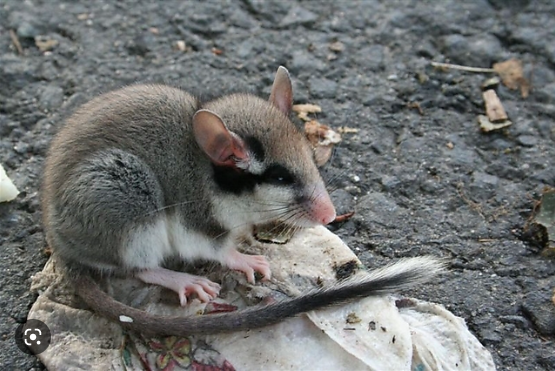
The garden dormouse (Eliomys quercinus) is smaller than the dormouse and reaches a maximum length of 14 cm, not including the tail which measures 10 cm. The head is reddish, the muzzle has white and black areas, the upper part of the body is reddish-brown and the lower part is white. The tail is black on top and white underneath.
Fox
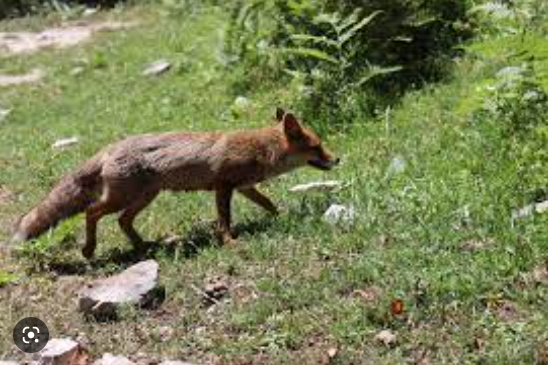
The long and soft fur is generally a rich dark red, although the coloration can vary depending on the species and the seasons; in particular, the tawny color is typical of the upper parts of the body, while the chest, abdomen, and throat are covered with grayish-white hairs.
The toes of the front and hind legs are black as is the tip of the ears. The tail, on the other hand, is reddish with black, yellow, or gray shades; sometimes the tip is white in some forms and black in others.
The footprint, like that of other Canids, shows the imprint of the claws, the digital pads, and the plantar pad, but compared to that of a dog of the same size, it appears more elongated and oval.
The fox, depending on its gait, leaves different tracks on the ground: at a walk, the footprints follow each other forming a zig-zag line; at a trot or when moving close to the ground to avoid being seen, the prints are along a straight line, as the hind ones cover the front ones; when it runs quickly, it brings the hind legs to the level of or in front of the front ones, leaving a track similar to that of the hare (Lepus europaeus) COMPLETE FACT SHEET >>
The red fox is easily recognizable by its slender body, large erect ears, pointed muzzle, and bushy tail. Generally, the total length of the trunk ranges between 60 and 90 cm, the tail measures between 30 and 48 cm, and the weight varies from 6 to 10 kg.
©BabbaroHouse